Text
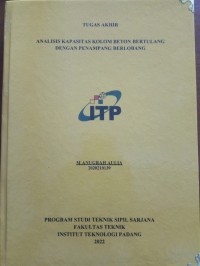
Analisis Kapasitas Kolom Beton Bertulang dengan Penampang Berlobang
ABSTRACT
The column is one of the most important parts of the structure of the building whose main task is to support the vertical compressive axial load. Collapse in the column structure is an element that can cause the collapse of the floor or its upper structure. Generally, columns that often suffer damage due to earthquakes are hollowed out columns. This is due to the opening (hole) in the cross section of the column without realizing it can reduce the ability of a column. Therefore, an analysis of the capacity of reinforced concrete columns with a cross-section of the wall.
This study should be conducted in a clear and orderly order so that the appropriate results are obtained. The process of implementing this research is divided into several parts, namely the description and model making, structural analysis, discussion and output in the form of conclusions. In this study, the cross-section of columns was modeled as many as five kinds. Based on the results of the calculation of axial capacity and column bending, the hole affects the decrease in column capacity, namely the greater the hole area, the difference in the capacity of the hollowed column to the non-hollowed column is greater. As for the five modelings, the maximum load that occurs in the column can still be held by the column because the load is still in the plan capacity diagram. But in accordance with SNI regulation 2847-2013 article 6.3.4 the amount of holes allowed only up to four percent of the area of the column cross section.
Keywords: Column, Reinforced Concrete, Hollow Section
Ketersediaan
Informasi Detail
- Judul Seri
-
Tugas Akhir Teknik Sipil Sarjana
- No. Panggil
-
2221-014
- Penerbit
- Padang : Fakultas Teknik ITP., 2022
- Deskripsi Fisik
-
-
- Bahasa
-
Indonesia
- ISBN/ISSN
-
2020210139
- Klasifikasi
-
NONE
- Tipe Isi
-
text
- Tipe Media
-
computer
- Tipe Pembawa
-
-
- Edisi
-
-
- Subjek
-
-
- Info Detail Spesifik
-
-
- Pernyataan Tanggungjawab
-
M. Anugrah Aulia
Informasi Lainnya
- NIM
-
-
Versi lain/terkait
Tidak tersedia versi lain
Lampiran Berkas
Komentar
Anda harus masuk sebelum memberikan komentar
 Karya Umum
  Filsafat
  Agama
Agama  Ilmu-ilmu Sosial
  Bahasa
  Ilmu-ilmu Murni
  Ilmu-ilmu Terapan
  Kesenian, Hiburan, dan Olahraga
  Kesusastraan
  Geografi dan Sejarah